

Tezer Özlü
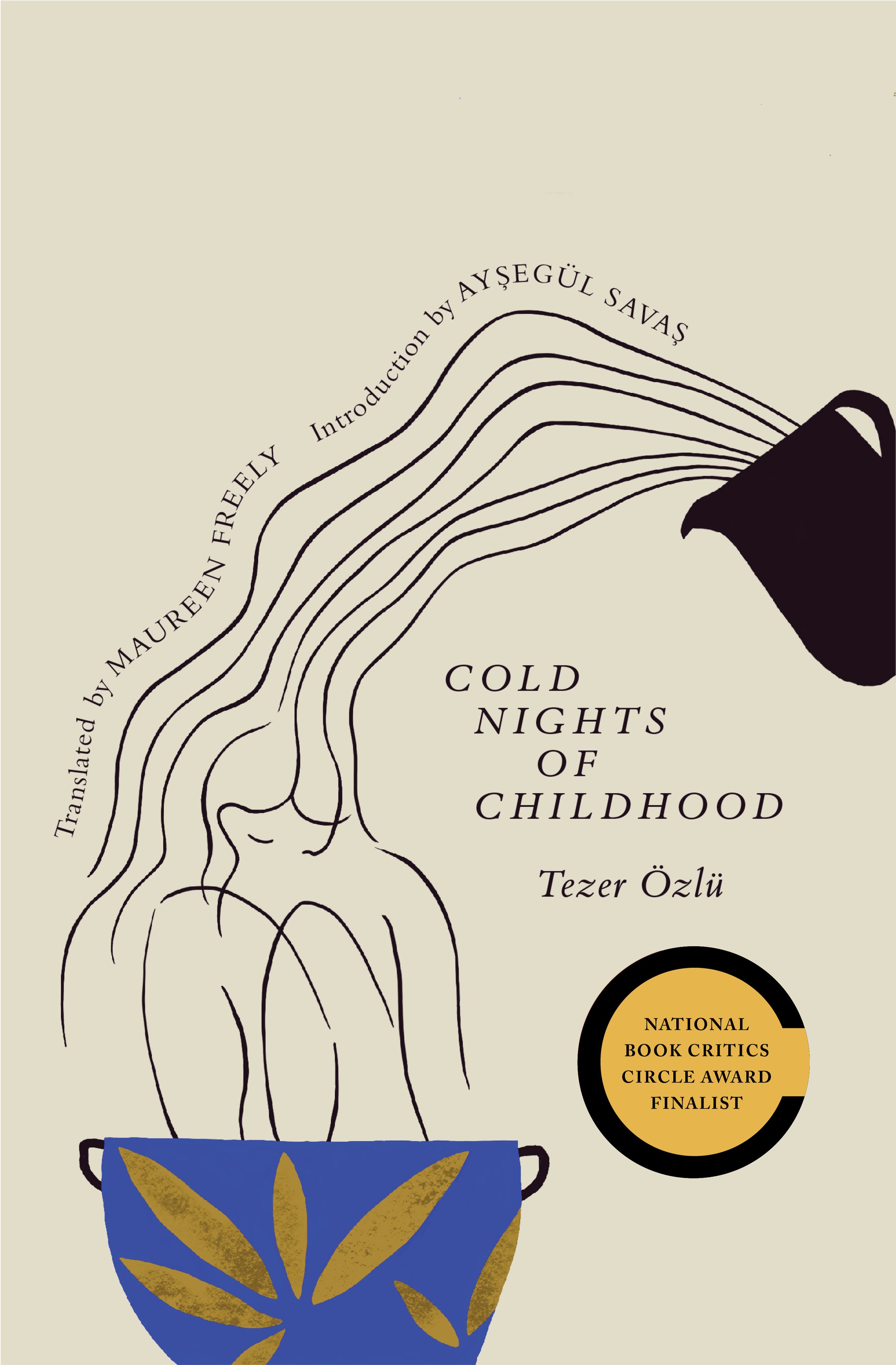
Tezer Özlü (1943–1986) claimed her place in Turkish letters by breaking every rule imposed on her. Though she was misunderstood by most throughout her short life, her writings have gone on to inspire a new generation of feminist writers and readers. Cold Nights of Childhood is her first book to be translated into English.
Titles by Tezer Özlü
Tezer Özlü
Translated from the Turkish by Maureen Freely.
2023 National Book Critics Circle Award, winner
“A profoundly moving account of desperation, exhilaration, and endurance.”—Kirkus Reviews
The Bell Jar meets Good Morning, Midnight, by one of Turkey’s most beloved writers.
The narrator of Tezer Özlü’s novel is between lovers. She is in and out of psychiatric wards, where she is forced to undergo electroshock treatments. She is between Berlin and Paris. She returns to Istanbul, in search of freedom, happiness, and new love.
Set across the rambling orchards of a childhood in the Turkish provinces and the smoke-filled cafes of European capitals, Cold Nights of Childhood offers a sensual, unflinching portrayal of a woman’s sexual encounters and psychological struggle, staging a clash between unbridled feminine desire and repressive, patriarchal society.
Originally published in 1980, six years before her death at 43, Cold Nights of Childhood cemented Tezer Özlü’s status as one of Turkey’s most beloved writers. A classic that deserves to stand alongside The Bell Jar and Jean Rhys's Good Morning, Midnight, Cold Nights of Childhood is a powerfully vivid, disorienting, and bittersweet novel about the determined embrace of life in all its complexity and confusion, translated into English here for the first time by Maureen Freely, with an introduction by Aysegül Savas.

Tezer Özlü
Translated from the Turkish by Maureen Freely
A writer finds solitude and salvation tracing the lives and deaths of three of her literary lights in a haunted and lyrical travelogue from NBCC Award–winner Tezer Özlü.
On an obsessive journey through Europe, a woman drawn to the gravesites of her literary idols—Cesare Pavese, Italo Svevo, Franz Kafka—puts her life, her writing, and her politics in conversation with theirs.
Untethered and spirit-like herself, she moves from lover to lover, city to city: Berlin, Hamburg, Prague, Vienna, Zagreb, Belgrade. As she is uncannily drawn to the site of Pavese’s suicide, her journey transmutes passion for literature into desire for meaning.
Occupying a liminal space between past and present, life and death, Journey to the Edge of Life is a deeply inquisitive, atmospheric, and rebellious novel that shows what such a journey can mean for a woman who has spent her life within the confines established by others.